
On a 5-gallon PET line, the heating tunnel is where the money is made—or lost. If the preform skin isn’t even, you’ll see axial streaks, handles that come up short, and scrap that chews through resin and uptime. If the heater can’t hold setpoint when you’re running hard, the blow molder starts hunting temperature and your cycle time drifts.
What matters under the hood
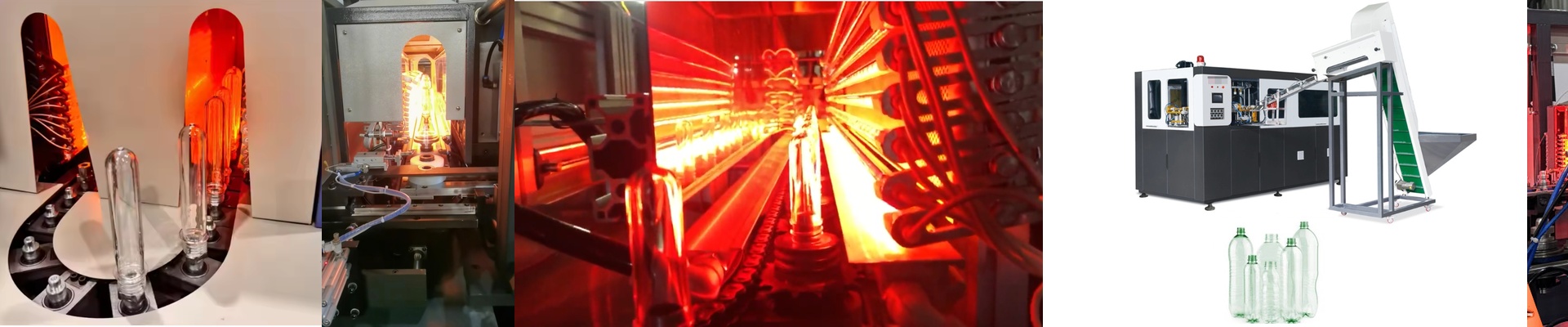
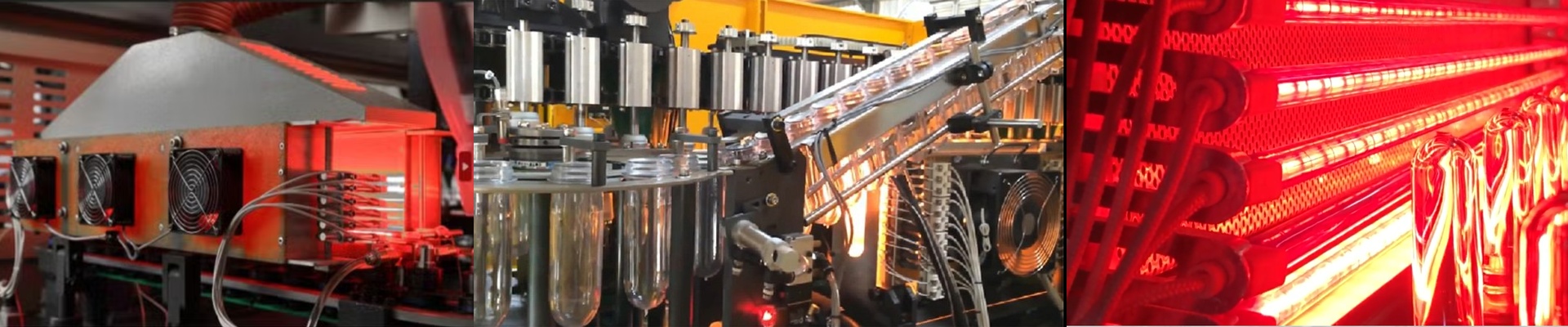
We spec short-wave quartz emitters for 5-gallon large preform heaters because they snap on and off fast, putting the energy right where it’s needed—on the preform surface, not into the tunnel air. Each emitter is matched to your machine’s voltage and power budget, with R7s connectors and standard mount centers so a replacement drops in without cutting brackets or rewiring the terminal block. The reflector geometry focuses the pattern across the preform wall, and the zone layout follows the original heating strategy, so you don’t have to rework the whole profile.
Why this approach fits 5-gallon
With 5-gallon, the preform wall is thick and the thermal mass is serious. Short-wave infrared brings the surface up to stretch temperature quickly, so the heating window stays short and repeatable. That gives you a stable parison temperature, fewer quality swings, and more consistent shots per hour. Energy use drops because the emitter cycles fast, and the focused pattern doesn’t dump heat into the tunnel body. Over a year, you’ll see fewer lamp changes and less downtime—and that matters when you’re running 24/7.
The details that make it work
Infrared is line-of-sight, so preform rotation, spacing, and keeping reflectors clean all hit uniformity directly. These heaters are built to fit the OEM electrical and mechanical envelopes, but if your machine has an older heating module, confirm the connector type and mounting pitch before ordering. Match the lamp to the specified wattage, and keep the heating tunnel clear of dust and cooling drafts. Those small moves are what keeps the temperature profile honest.